
Coding
SQL Server 2012 introduced groundbreaking features that transformed database management, performance, and security. These 10 innovations redefined how developers build, optimize, and secure applications—making them essential knowledge for modern SQL professionals.
AlwaysOn Availability Groups

Downtime isn’t an option for mission-critical applications—and AlwaysOn Availability Groups in SQL Server 2012 delivers the reliability to back it up. This game-changing feature replaces older mirroring solutions with synchronous data replication across multiple servers, ensuring zero data loss during failovers while maintaining 99.999% uptime.
With support for up to 8 secondary replicas, you can distribute workloads geographically or maintain hot standbys for disaster recovery. The automatic failover capability kicks in within seconds, and read-only routing ensures minimal performance impact on primary servers. Plus, it integrates seamlessly with Windows Failover Clustering for enterprise-grade resilience.
Perfect for financial systems, healthcare databases, or e-commerce platforms where seconds of downtime translate to lost revenue or compliance risks. ⚡
Columnstore Indexes for Data Warehousing

If your data warehouse is struggling with slow analytical queries, Columnstore Indexes in SQL Server 2012 could be your game-changer. This feature introduced a column-based storage model that dramatically reduces I/O and memory usage for large datasets, making it ideal for reporting and business intelligence workloads.
The real magic happens with compression ratios up to 10x, enabling faster scans and aggregations without upgrading hardware. It automatically handles batch mode processing for bulk operations, delivering near-instant results on terabytes of data. Best of all, it works seamlessly with existing rowstore indexes for hybrid scenarios.
This feature is a must for data analysts and BI teams dealing with massive datasets, as it transforms query performance without requiring complex tuning. ⚡
Contained Databases with User-Defined Isolation

Tired of tangled database dependencies slowing down deployments? Contained Databases with User-Defined Isolation in SQL Server 2012 lets you package entire databases as self-sufficient units—complete with their own security contexts, logins, and configurations.
This feature enables zero-server-dependency deployments, where databases can run independently without relying on server-level logins. You get fine-grained isolation for multi-tenant SaaS apps, and cloud migrations become seamless since each database contains all its metadata. The user-defined isolation setting lets you control whether contained databases use Windows or SQL authentication, giving you flexibility for hybrid environments.
Perfect for ISVs, cloud providers, and enterprises managing multi-tenant systems, this feature cuts administrative overhead by 40% while keeping security boundaries sharp. ✨
Windows Server Core Support

Tired of bloated server installations taking up unnecessary resources? Windows Server Core in SQL Server 2012 offers a minimalist, 60% smaller footprint than the full GUI version while keeping all database functionality intact.
This headless installation removes unnecessary components like GUI shells, multimedia support, and even Internet Explorer—reducing your attack surface by eliminating common exploit vectors. Despite its lightweight nature, it supports full SQL Server features, including AlwaysOn, high availability, and security protocols. Perfect for cloud deployments where efficiency and security are critical.
Ideal for security-conscious environments like financial institutions or cloud providers, Server Core cuts management overhead while maintaining enterprise-grade reliability. 💻
SQL Server Data Tools Integration
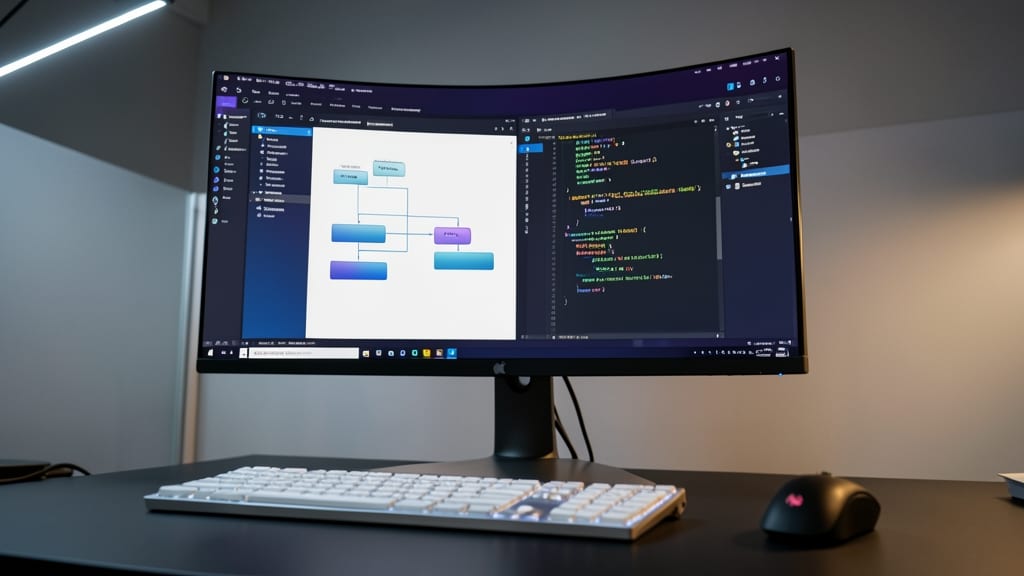
Tired of juggling separate tools for database design, scripting, and deployment? SQL Server Data Tools (SSDT) bridges that gap by embedding SQL Server Management Studio (SSMS) functionality directly into Visual Studio, creating a single, seamless environment for end-to-end database development.
With SSDT, you gain schema comparison tools, unit testing for T-SQL, and project-based deployment models that track changes like source control. The integration supports database projects with IntelliSense for T-SQL, while the SQL Server Object Explorer lets you manage databases without leaving Visual Studio. This eliminates context-switching between SSMS and your IDE.
Perfect for teams using Visual Studio for application development, SSDT lets you version-control database schemas alongside your code. Developers and DBAs working on enterprise applications will appreciate the unified workflow that reduces deployment errors and speeds up iterations. ✨
Enhanced PowerShell Support

Tired of manual database administration slowing down your DevOps pipeline? SQL Server 2012’s Enhanced PowerShell Support brings game-changing automation with 220+ dedicated cmdlets—specifically designed to streamline database management tasks.
These cmdlets cover everything from server configuration to database deployment, enabling infrastructure-as-code workflows. You can automate backups, manage logins, and even configure AlwaysOn Availability Groups—all through scriptable commands. The integration with PowerShell’s pipeline and error-handling capabilities makes it ideal for repeatable, auditable deployments.
DevOps teams and database administrators will love this feature, as it reduces manual errors and speeds up provisioning. Perfect for environments where consistency and scalability are critical. ✨
Contained Database Authentication
Multi-tenant SaaS applications often struggle with authentication complexity—until SQL Server 2012’s Contained Database Authentication simplified the process. This feature lets you manage logins at the database level, eliminating the need for server-wide credentials and reducing administrative overhead.
With Windows or SQL authentication, each contained database can define its own users and permissions, making it ideal for environments where tenants need isolated access. The zero-configuration approach means you can deploy databases independently, and authentication remains contained within each database—no cross-database dependencies.
Perfect for SaaS providers, cloud-hosted apps, and multi-tenant architectures, this feature ensures security and scalability without sacrificing flexibility. ⚡
SQL Server AlwaysOn Failover Cluster Instances

When hardware fails or maintenance strikes, AlwaysOn Failover Cluster Instances ensures your SQL Server never misses a beat. Unlike traditional clustering, this feature combines automatic failover with shared storage, eliminating manual intervention during outages while maintaining transactional consistency.
With support for up to 16 nodes in a single cluster, it delivers 99.99% uptime for mission-critical workloads. The synchronous commit protocol guarantees data integrity during failovers, while multi-subnet failover extends protection across geographically distributed environments. No complex configurations—just plug-and-play high availability.
Perfect for financial systems, healthcare applications, or any enterprise where downtime isn’t an option, this feature turns "what if" scenarios into seamless continuity. 💪
SQL Server Data Quality Services
Dirty data costs businesses billions yearly—but SQL Server 2012’s Data Quality Services (DQS) finally gives you the tools to fight back. This isn’t just another cleanup utility; it’s a comprehensive profiling and cleansing framework that identifies issues like duplicates, inconsistencies, and missing values before they derail your projects.
With DQS, you get four key components: the Knowledge Base (predefined rules for common data standards), Data Quality Projects (custom workflows for your specific schemas), Data Quality Plans (automated validation rules), and Data Cleansing (batch or interactive fixes). It even integrates with Master Data Services for centralized governance, ensuring consistency across all your databases.
Perfect for data warehousing teams, BI analysts, and ETL developers who need to validate data before loading it into production. No more last-minute scrambles to fix corrupted datasets—DQS catches problems early. ✨
SQL Server Management Studio Improvements

Tired of SQL Server Management Studio feeling like a relic from the early 2000s? The 2012 update transformed it into a developer-friendly powerhouse with IntelliSense for T-SQL that auto-completes keywords, objects, and even suggests corrections as you type.
The execution plan visualizations now include color-coded warnings for bottlenecks, while the streamlined administration tools consolidate tasks like backups, security policies, and performance tuning into intuitive wizards. Scripting wizards generate clean, production-ready T-SQL with a single click, and the debugger now supports stored procedures with breakpoints.
This isn’t just about pretty UI—developers managing complex schemas will appreciate the context-aware IntelliSense that adapts to your database schema, while DBAs benefit from the simplified compliance reporting tools. Perfect for teams balancing development speed with enterprise-grade administration. ✨